


iMRS Smart Pulser System
The new SMART PULSER PEMF System
For 30 years, Swiss Bionic Solutions has been using conventional precision winding technology to manufacture solid copper coils for applicator production. The Swiss Bionic Solutions' engineering department has now developed a completely new design and manufacturing concept for PEMF applicator coils, which will launch a new applicator generation in 2026 - the Smart Pulser PEMF System. The groundbreaking design and technology is defined as 'Inductive Fiber Coils for Contactless Energy Transfer.' The new Full Body S.Mat, which now has 8 copper coils, still produces the Triple Sawtooth wave, while the S.Wrap produces a Square Wave... two of the best waveforms for inducing currents to charge your cells.
What's New with the Smart Pulser?
- Considerably less weight compared to conventional “wire” coils!
- Applicators can also be bent without risking damage and slept upon in your bed!
- The coil layout can be calculated precisely and designed as desired over the entire surface (= tailored fiber density and wire placement)!
- The construction is extremely resilient and durable!
- 3 year warranty
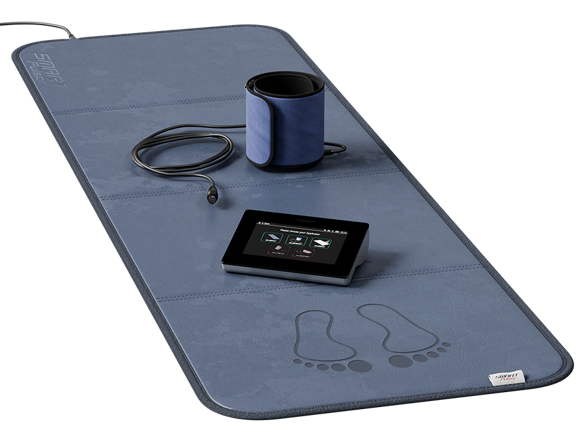
SMART PULSER PEMF SYSTEMS & ACCESSORIES
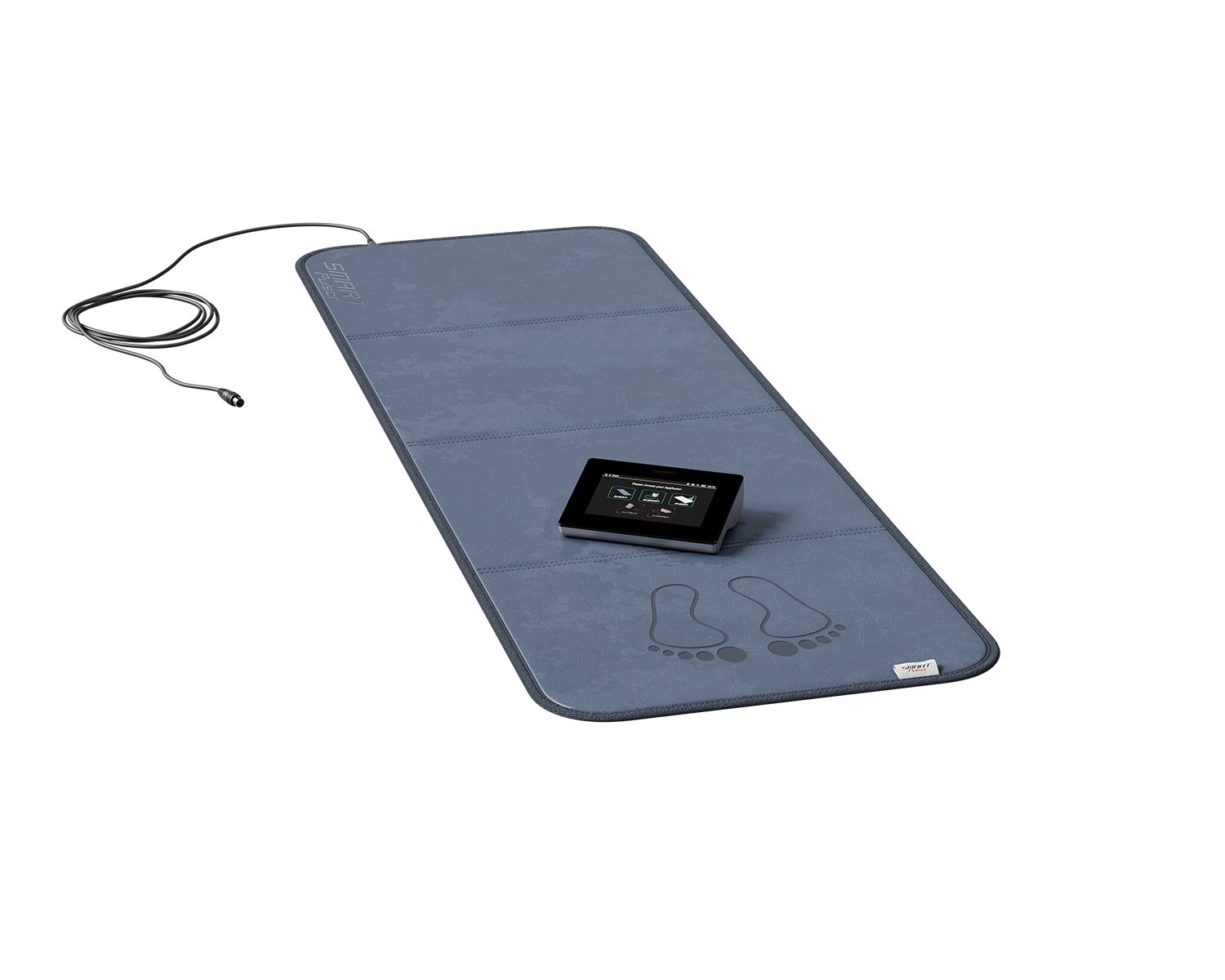
Smart Pulser Basic Set
USD $2,769 + GST & USD $160 shipping
Free Shipping to the US & Canada
The Basic Smart Pulser Set comes with the controller and the S-Mat (full body mat applicator only).
Includes:
- Control Unit with Touch Screen
- S-Mat (Full Body Applicator)
- 5 Automatic Preset Treatment Programs
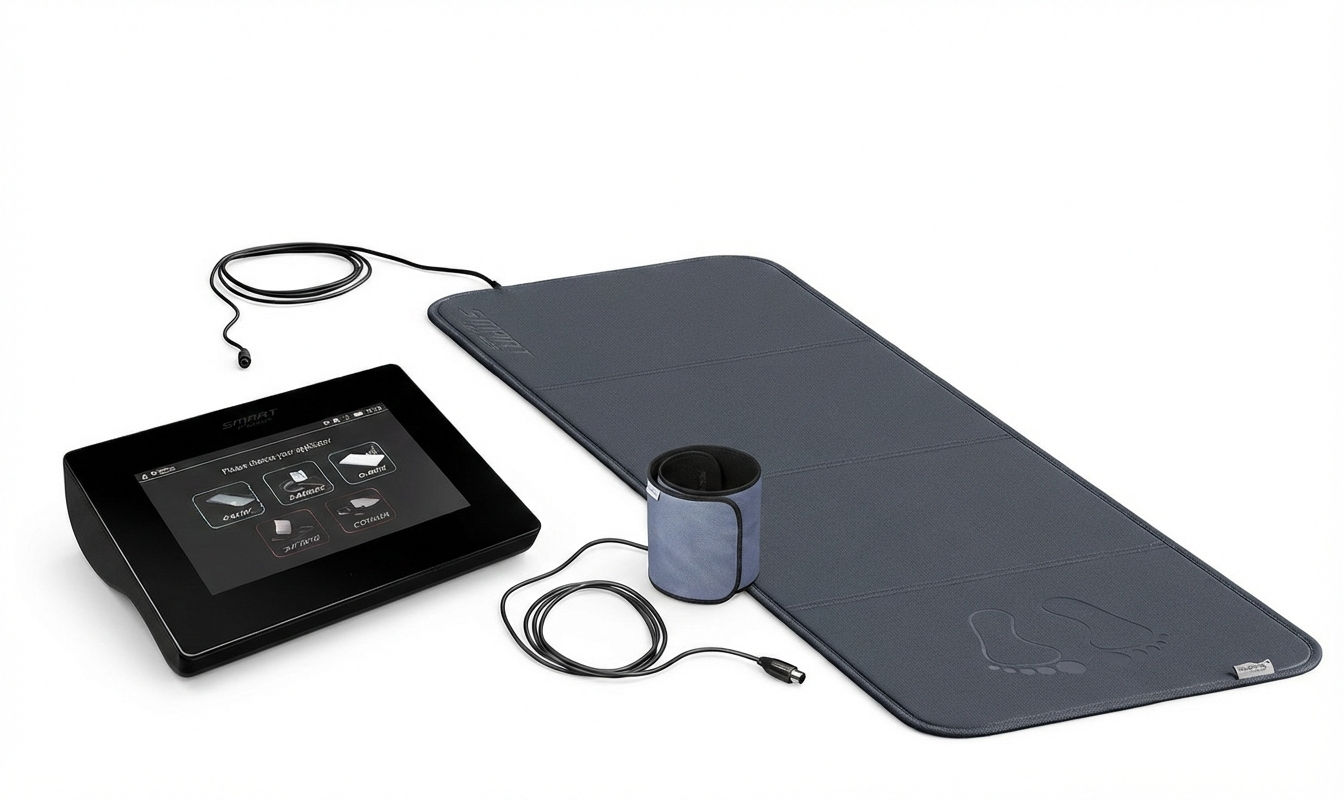
Smart Pulser Complete Set
USD $3,079 + GST & USD $160 Shipping
Free Shipping to the US & Canada
The Smart Pulser Complete comes with the controller and the S-Mat (full body mat applicator) & the S-Wrap (local applicator)
Includes:
- Control Unit with Touch Screen
- S-mat (Full Body Applicator)
- S-Wrap (local applicator)
- 5 Automatic Preset Treatment Programs
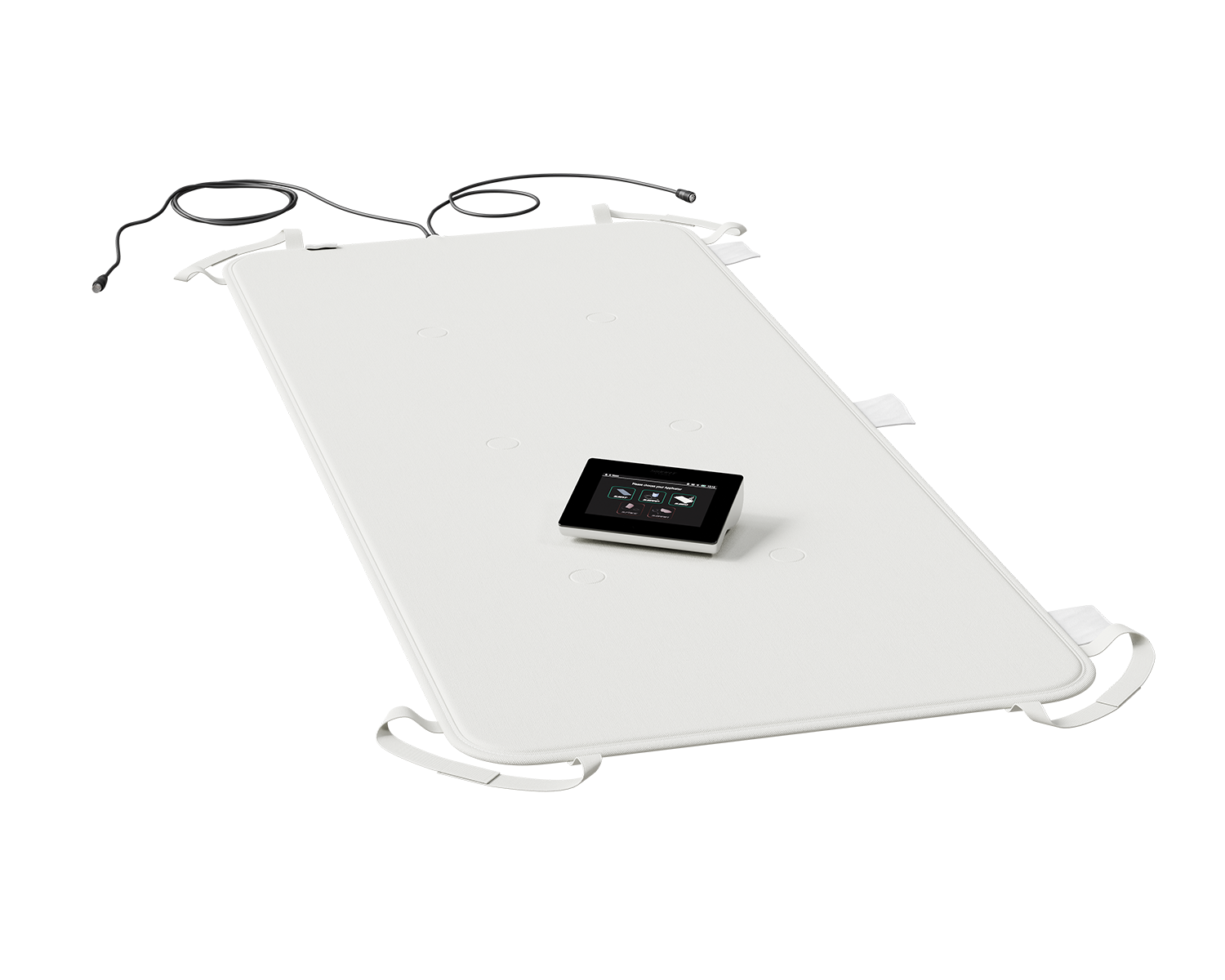
Smart Pulser Uno Sleep Set
USD $2,849 + GST & USD $160 Shipping
Free Shipping to the US & Canada
The Smart Pulser Uno Sleet Set comes with the controller and the S-Bed (1 Full body mat) to be fitted on a mattress.
Includes:
- Control Unit with touch Screen
- Single Person mattress Applicator
- 5 Automatic Preset Treatment Programs
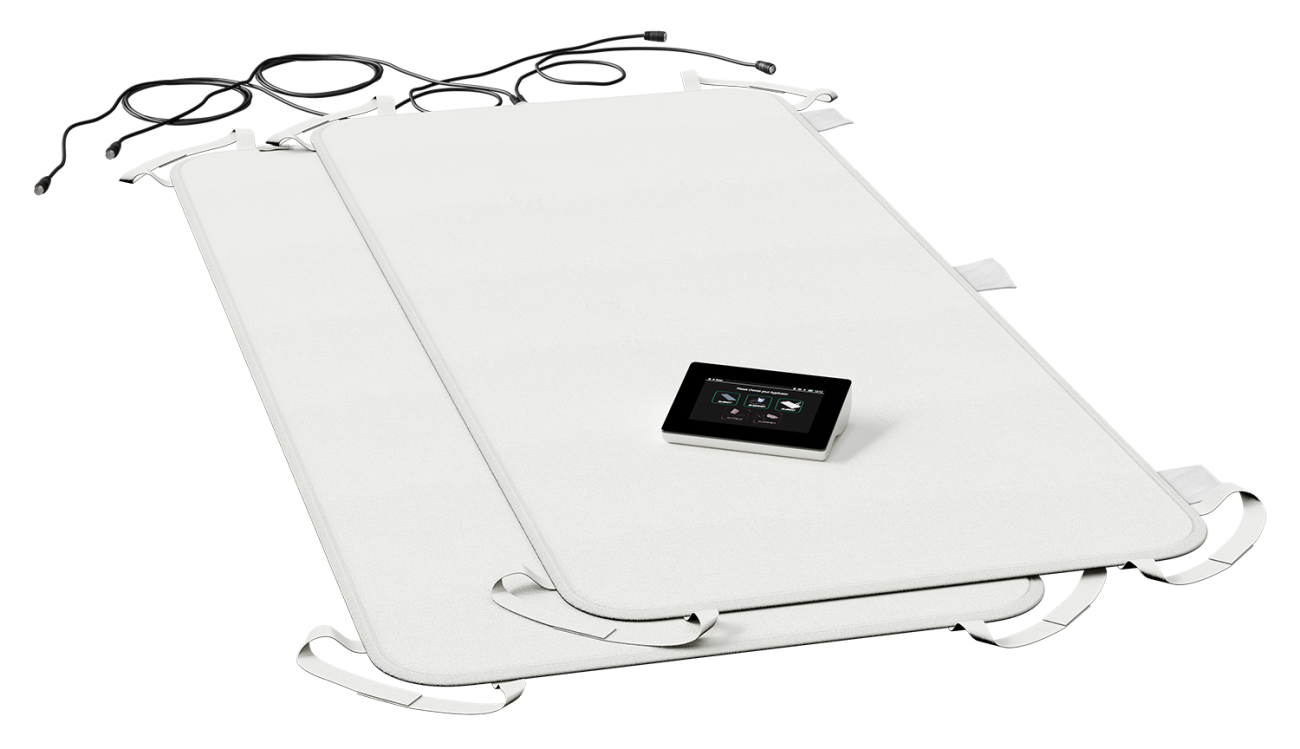
Smart Pulser Duo Sleep Set
USD $4,019 + GST & USD $230 Shipping
Free Shipping to the US & Canada
The Smart Pulser Duo Sleet Set comes with the controller and TWO of the S-Beds (2 Full body mats) to be fitted on a mattress. Includes:
- Control Unit with touch Screen
- TWO Single Person mattress Applicators
- Independent control of each applicator
- 5 Automatic Preset Treatment Programs
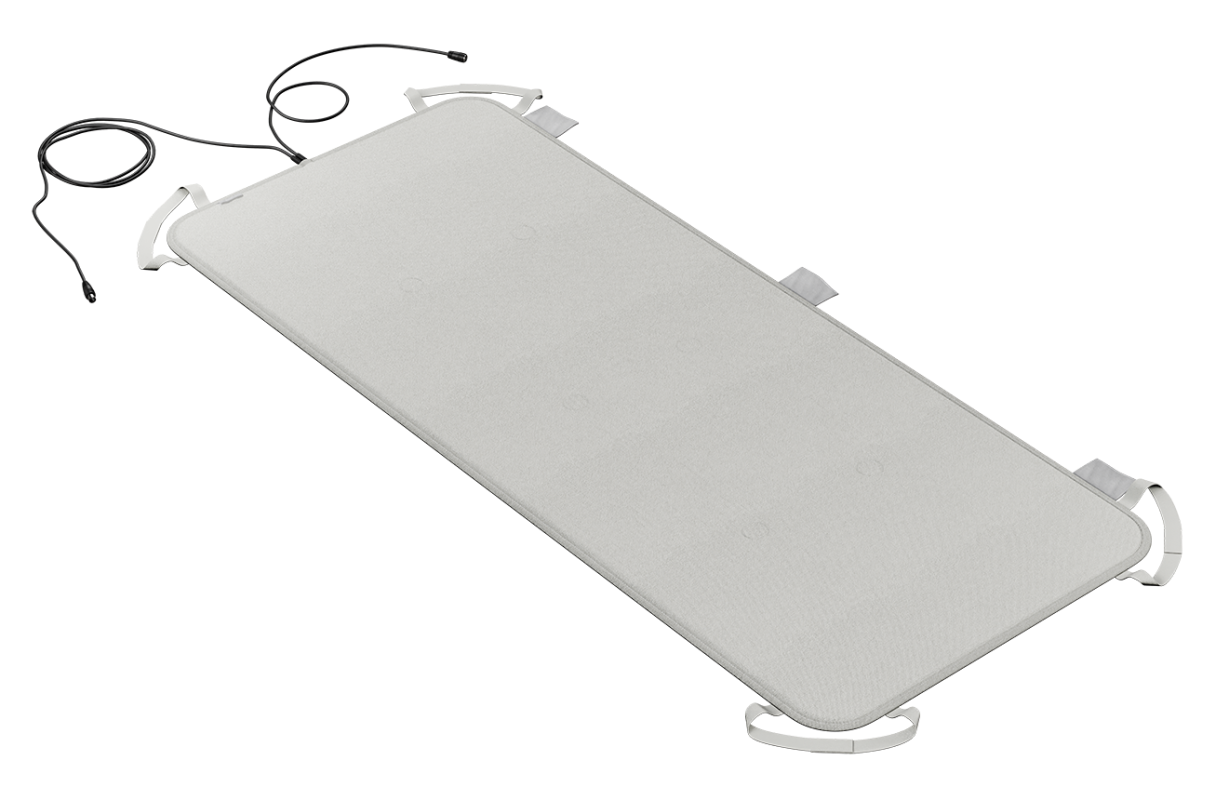
Smart Pulser S.Bed Applicator
USD $1,299 + GST & USD $130 Shipping
Free Shipping to the US & Canada
The Smart Pulser the S-Bed (1 Full body mat) to be fitted on a mattress.
Includes:
- One S.Bed applicator
- Requires the Smart Pulser Controller
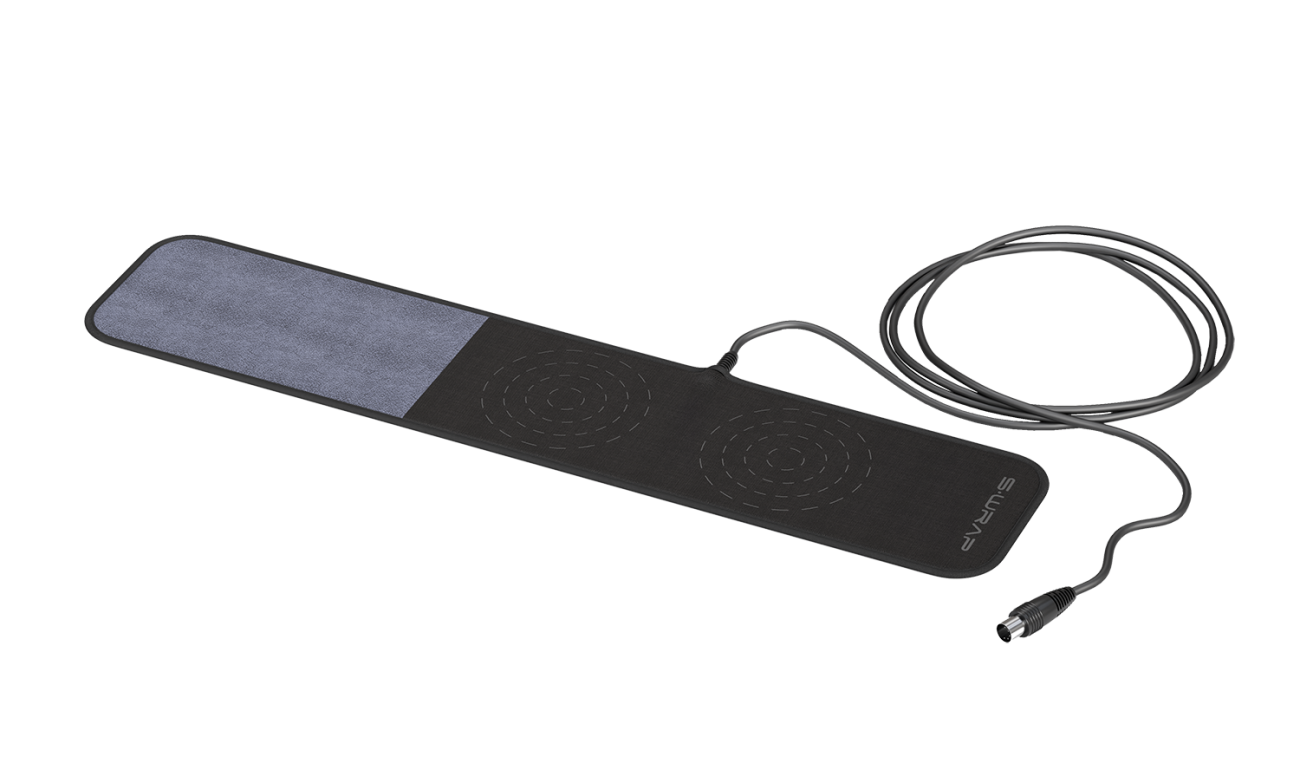
Smart Pulser S.Wrap
USD $329 + GST & Shipping
Free Shipping to the US & Canada
The Smart Pulser S.Wrap generates a Square Wave and can be used on any part of the body as a local treatment.
Includes:
- One S.Wrap applicator
Inductive Copper Fibre Coils vs Solid Copper Coils
When dealing with Extremely-Low Frequency (ELF)—typically defined as frequencies from 3 Hz to 300 Hz—and Extremely-Low Intensity (ELI) fields, the physics shifts away from the high-frequency concerns (like the skin effect) and toward precision, thermal stability, and field uniformity.
The choice between dense copper fiber (multi-filament/stranded) and solid copper wire in a flat (pancake) coil configuration significantly impacts the “cleanliness” of the signal and the efficiency of the device.
1. Reduction of Eddy Currents and Proximity Effects
Even at very low frequencies, internal “swirling” currents called eddy currents can occur within the conductor itself if it is exposed to its own magnetic field or that of adjacent turns.
• Solid Copper: A thick solid wire provides a large, continuous volume for eddy currents to circulate. This creates small amounts of internal heat and, more importantly, generates “counter-fields” that can slightly distort the intended ELF wave shape.
• Dense Fiber: By breaking the conductor into many fine, insulated (or semi-insulated) filaments, the path for eddy currents is physically restricted. This leads to:
• Higher Magnetic Purity: The resulting field more accurately reflects the input current waveform.
• Lower Proximity Effect: In flat coils, where windings are pressed tight, fibers prevent the current from “crowding” to one side of the wire, maintaining a more uniform current density.
2. Field Homogeneity and “Near-Field” Smoothness
In ELI
applications, the goal is often to interact with biological systems or
sensitive sensors where the spatial distribution
of the field matters.
•
Solid Wire: Because
the current is concentrated in a single large core, the “near-field” (the space
immediately hovering over the coil) can have “peaks” and “valleys”
corresponding to the physical position of each wire turn.
• Dense Fiber: The “density” of the fibers allows for a more diffuse and averaged current distribution across the geometry of the coil. This results in a smoother, more homogeneous electromagnetic “blanket” rather than a series of distinct ridges.
2. Field Homogeneity and “Near-Field” Smoothness
In ELI
applications, the goal is often to interact with biological systems or
sensitive sensors where the spatial distribution
of the field matters.
•
Solid Wire: Because
the current is concentrated in a single large core, the “near-field” (the space
immediately hovering over the coil) can have “peaks” and “valleys”
corresponding to the physical position of each wire turn.
•
Dense Fiber: The
“density” of the fibers allows for a more diffuse and averaged current
distribution across the geometry of the coil. This results in a smoother, more
homogeneous electromagnetic “blanket” rather than a series of distinct ridges.
3. Effective Resistance and Efficiency
Efficiency in
ELF is primarily a battle against Ohmic heating.
|
Feature |
Solid Copper Wire |
Dense Copper Fiber |
|
DC Resistance |
Lower (higher packing factor of copper). |
Slightly higher (due to air/insulation gaps). |
|
AC Resistance |
Increases faster with frequency/harmonics. |
Remains stable across a wider range. |
|
Flexibility |
Rigid; prone to micro-fractures if bent. |
Highly flexible; maintains integrity. |
While solid
wire has better DC conductivity, dense fiber coils excel if the ELF signal
isn’t a pure sine wave. If you are using more complex Pulsed Electromagnetic Fields (PEMF), the
“pulses” contain high-frequency harmonics. Fiber coils handle these harmonics
with much higher efficiency, preventing the signal from “blurring.”
4. Thermal Stability and Surface Area
ELI fields
require extreme stability. Even a slight change in temperature can change the
resistance of the copper, which in turn fluctuates the field intensity.
•
Surface Area: Dense
fibers have a vastly larger total surface area compared to a solid wire of the
same gauge.
•
Heat Dissipation: This
increased surface area allows the coil to shed heat much faster. In an exposed
coil configuration, this means the coil stays closer to ambient temperature,
ensuring the field intensity remains constant over long exposure sessions.
|
Summary of Advantages For an
exposed ELI-ELF application, dense copper
fiber flat coils are generally superior because they: 1.
Minimize internal field distortions (eddy currents). 2.
Provide a more uniform “near-field” for the subject. 3.
Maintain the integrity of complex pulse shapes
(harmonics). 4.
Offer better thermal stability, which is critical for
maintaining “Extremely-Low Intensity” precision. |
The “Slew-Rate” Story
In the context
of electromagnetic fields, dense copper fiber
offers a significantly better slew rate
than solid copper wire.
The slew
rate—the maximum rate of change of the magnetic field is essentially a measure
of how “crisp” your waveform is. While we are operating at Extremely-Low
Frequencies (ELF), the slew rate is a
high-frequency phenomenon. If you want a square wave or a sharp
pulse to actually look like a square or a pulse, the coil must be able to
respond to the high-frequency harmonics that make up those sharp edges.
Here is why copper fiber wins
for slew rate:
1. Elimination of “Magnetic Drag” (Eddy Currents)
When you try to
change the current in a coil rapidly to achieve a high slew rate, the changing
magnetic field induces eddy currents
within the conductor itself.
•
Solid Wire: The
large cross-section allows for significant internal eddy currents. These
currents create a secondary magnetic field that opposes the primary change
(Lenz’s Law). This acts like a “magnetic sludge” or drag, rounding off the
corners of your waveform and slowing the maximum rate of change of the magnetic
field (slew rate).
•
Dense Fiber: Because
the conductor is broken into many tiny, isolated filaments, the physical space
for eddy currents to form is virtually eliminated. The magnetic field can
“snap” into place much faster.
2. Reduced AC Resistance at the Leading Edge
A fast slew
rate requires the coil to handle high-frequency components (often in the
kilohertz or megahertz range) during the “rise time” of the pulse.
•
Solid Wire: Suffers
from the skin effect, where the
current is pushed to the outer surface of the wire at high speeds. This
dramatically increases resistance during the rise of the pulse, choking the
slew rate.
•
Dense Fiber: Distributes
the current across the surface of every individual fiber. This keeps the
resistance low even during the fastest part of the signal transition, allowing
for a much sharper, cleaner rise.
3. Improved Signal Fidelity
The ability of
a coil to reach its target field intensity is governed by its time constant.
By maintaining
a lower effective resistance across the broad spectrum of frequencies present
in a fast-rising edge, the fiber coil ensures that the magnetic field tracks
the input voltage with far less “lag.”
Comparison Summary
|
Metric |
Solid Copper Wire |
Dense Copper Fiber |
|
Waveform “Crispness” |
Soft/Rounded edges |
Sharp/Precise edges |
|
Harmonic Response |
Filters out high frequencies |
Preserves high frequencies |
|
Magnetic Lag |
High (due to eddy currents) |
Negligible |
|
Slew Rate Efficiency |
Energy lost to internal heat |
Energy converted to field change |
|
The Bottom Line If your ELI-ELF application
relies on specific pulse shapes (like sawtooth,
square, or complex fractal waves), the dense copper fiber coil is
the clear winner. It allows the field to “slew” to its target intensity
almost instantaneously without the magnetic damping inherent in solid wire. |